The Nehemiah Mental Health Recovery Framework
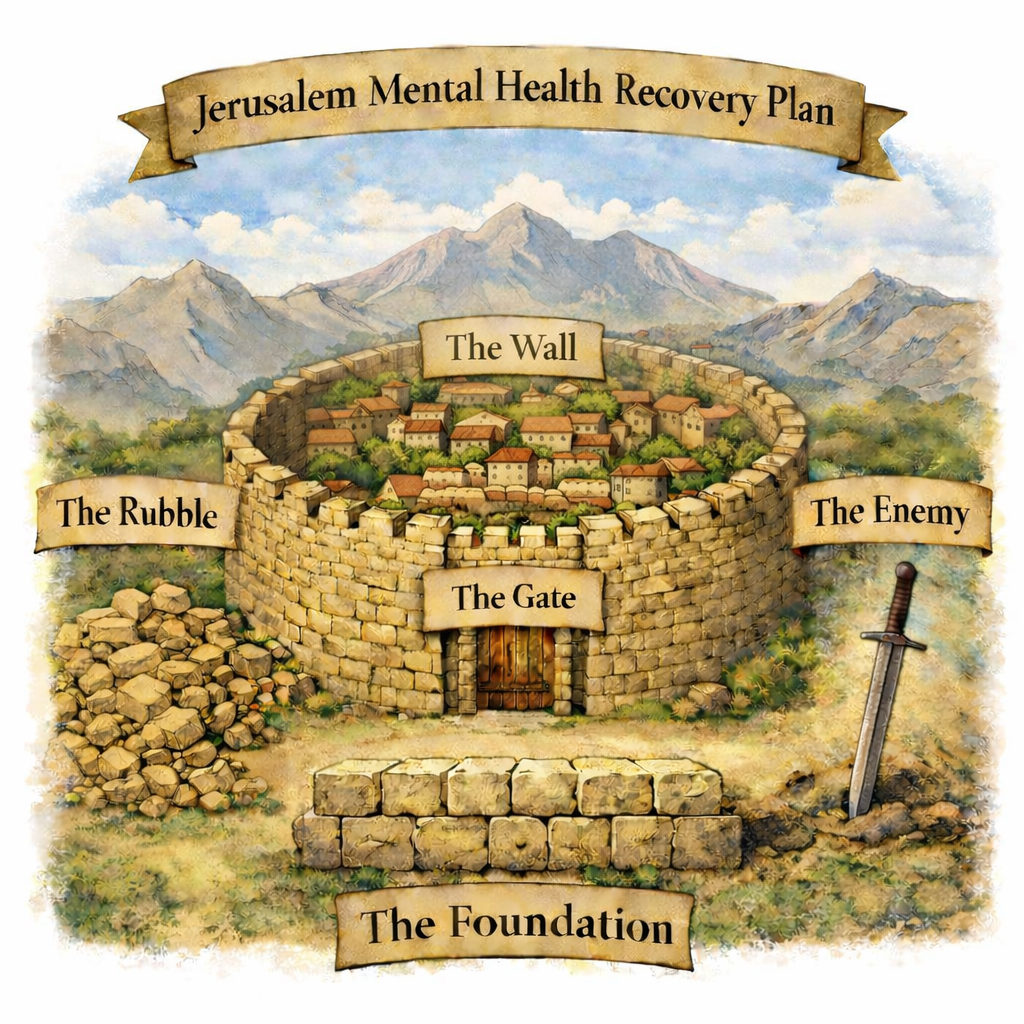
The Nehemiah Mental Health Recovery Plan is a simple, visual framework for understanding and supporting mental health recovery. It is based on the biblical story of the rebuilding of Jerusalem after the exile, as described in the book of Nehemiah. When the people returned to Jerusalem, the city was in ruins. The walls were broken down, the gates were burned, and rubble covered the ground. Before the people could live in peace again, the city had to be restored. The walls needed to be rebuilt, the rubble had to be cleared, the gates had to be secured, and the people had to remain alert against opposition. Mental health recovery often follows a similar path. When someone is struggling with anxiety, depression, trauma, or other mental health challenges, life can begin to feel disorganized, unsafe, or overwhelming. Recovery is not usually a single moment of change. It is a process of rebuilding stability, removing what hinders peace, setting healthy boundaries, and learning how to manage the pressures that come from within and around us. The Nehemiah Mental Health Recovery Plan uses five teaching points to describe this process.
The Six Teaching Points
The Foundation
The Wall
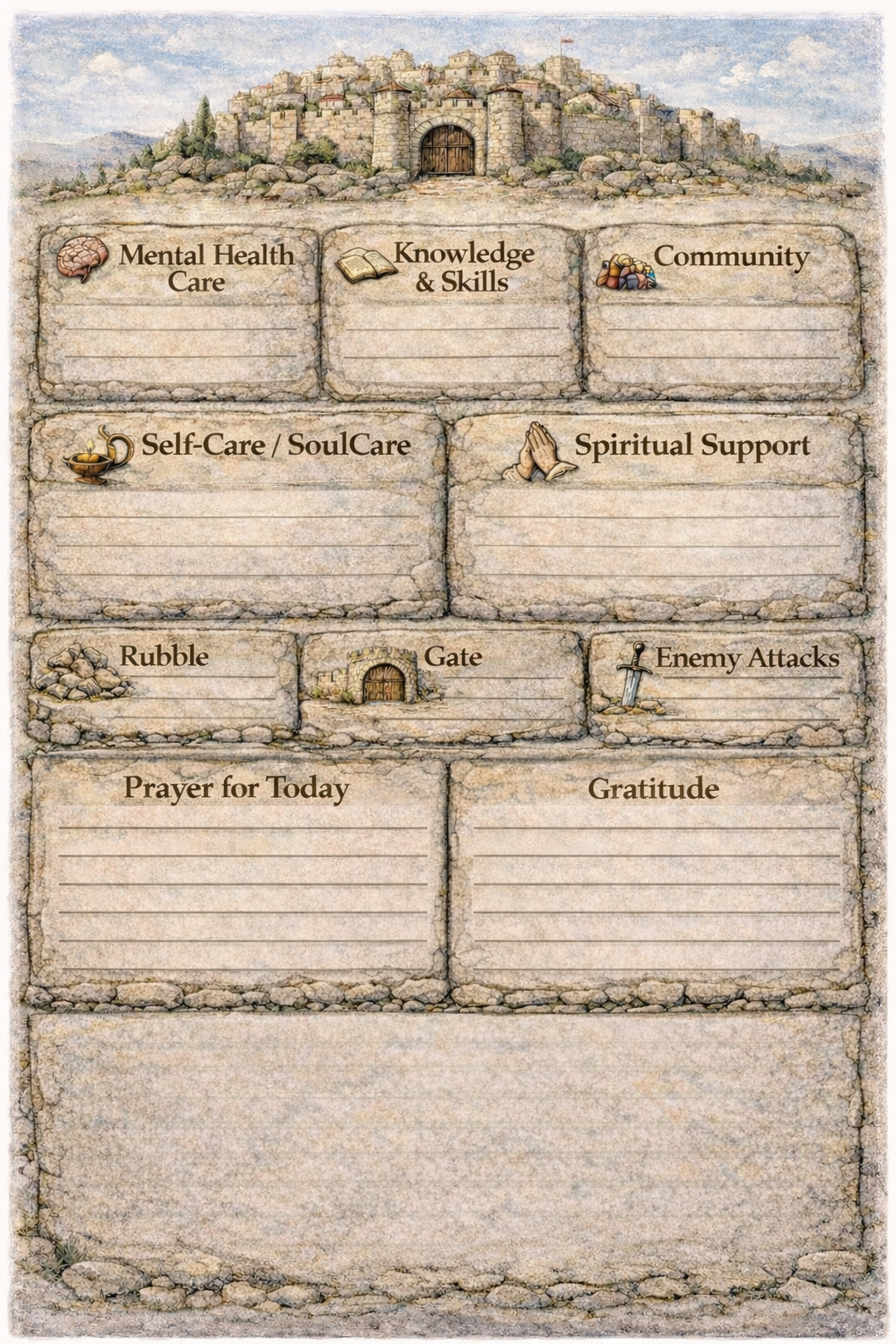
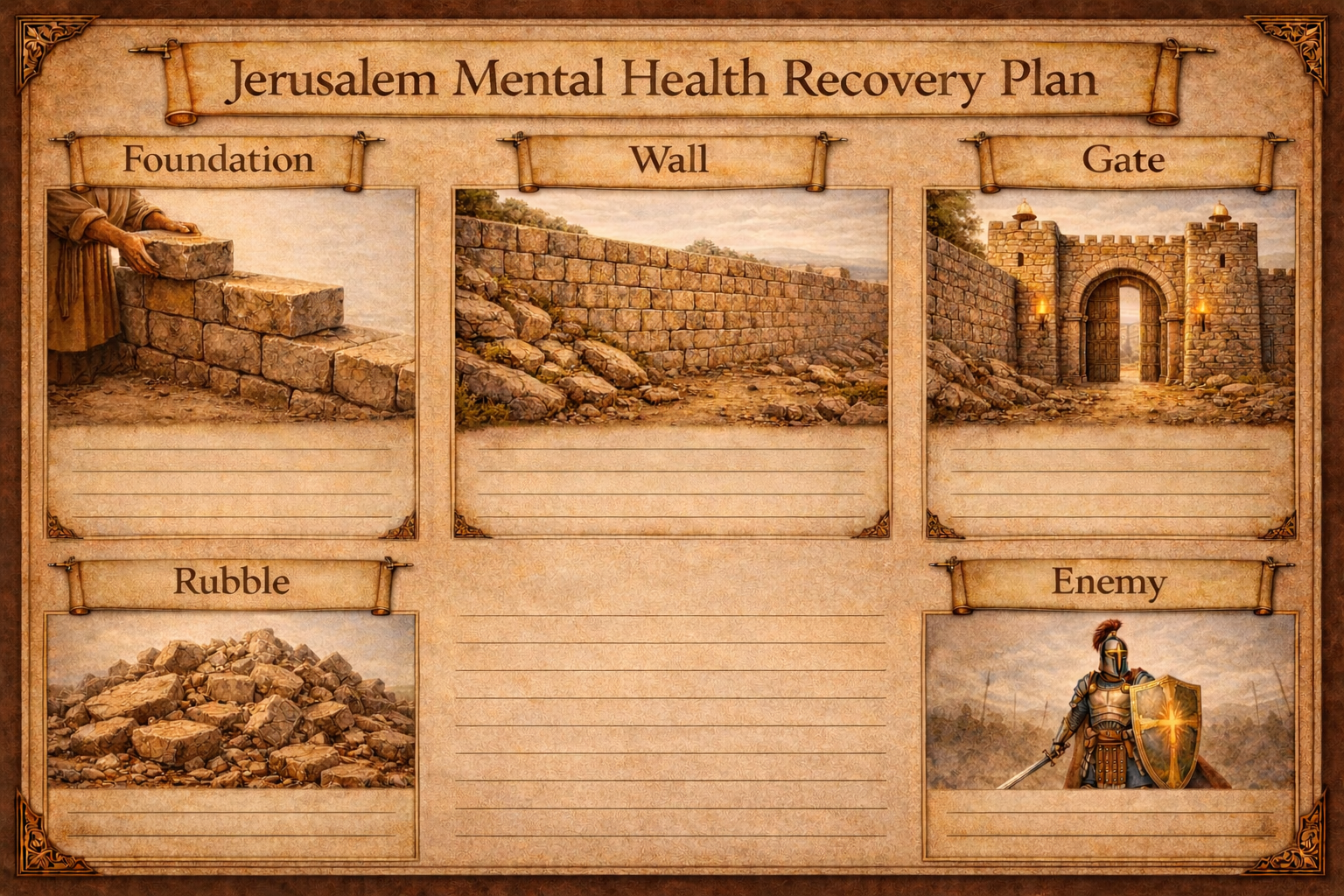
The wall represents stability, protection, and structure. In recovery, the wall is built through supportive practices and relationships that strengthen mental, spiritual, and physical well-being. These supports act like stones, creating a protective structure that helps manage symptoms and brings greater stability to daily life.
The Rubble
Before the wall could be rebuilt, the rubble had to be cleared. Rubble represents the things in life that interfere with stability—harmful habits, unhealthy environments, toxic relationships, or ineffective coping patterns. Recovery involves identifying and gradually removing what keeps life disorganized or unstable.
The Gates
The gates of a city controlled what came in and what went out. In mental health recovery, the gates represent boundaries. Healthy boundaries protect peace, limit harmful influences, and create space for growth. Learning to set and maintain boundaries is an essential part of long-term stability.
The Overseer
The Watchmen
As the people rebuilt Jerusalem, they faced constant pressure, distraction, and opposition. In recovery, the enemy represents the internal and external forces that disturb peace—distressing symptoms, negative thought patterns, spiritual struggles, and life pressures. Recovery includes learning how to recognize these attacks and respond with truth, support, and practical tools.
This plan is not a rigid program or a set of steps. It is a visual model that helps make sense of the recovery process. Each section offers teaching, practical tools, and resources that support the ongoing work of building a stable and peaceful life.